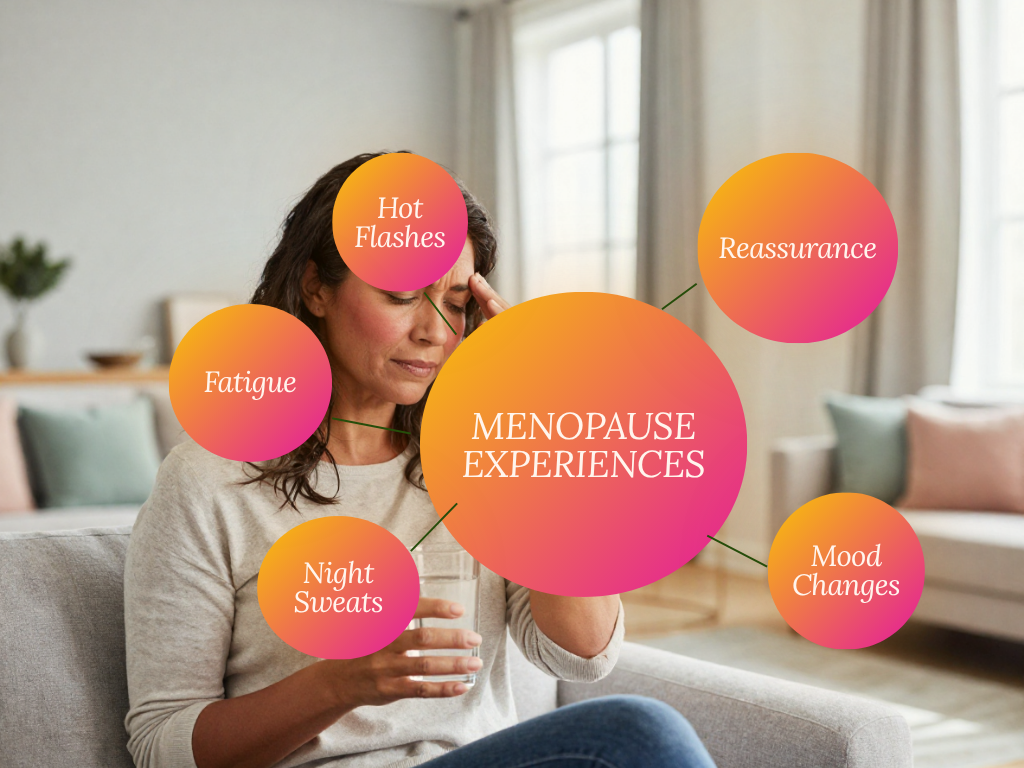
Learn about the physical and emotional changes that may occur during menopause and how to manage them.
What To Expect During Menopause
Many women begin experiencing menopause symptoms years before their menstrual cycles stop. This stage is called perimenopause. It can start in a woman’s early 40s and sometimes even earlier. Symptoms can begin subtly, while others become more noticeable over time. Many symptoms like brain fog, fatigue, or weight gain are often overlooked or attributed to other causes. However, these changes may signal that hormonal shifts are beginning. During perimenopause, levels of estrogen and progesterone fluctuate, then gradually decline. Hormonal changes can affect multiple body systems, leading to the variety of symptoms women may experience. Click the line below for more information on menopause: https://pmc.ncbi.nlm.nih.gov/articles/PMC11663262/
Understanding common menopause symptoms can help you recognize these changes in your body. Being informed about perimenopause and menopause can help you make lifestyle decisions that support your journey in a healthy way.
What Is Menopause?
Menopause is a natural stage of life that occurs when a woman’s menstrual periods permanently stop. A woman is considered to have reached menopause after 12 consecutive months without a period. The years leading up to menopause, known as perimenopause, are when most symptoms begin due to fluctuating and declining levels of hormones such as estrogen and progesterone.
15 Common Menopause Symptoms
Common Menopause Causes and Symptoms
Common symptoms of menopause are hot flashes, headaches, weight gain, hair loss, brain fog, to name a few. Every woman experiences menopause differently. Some may experience only mild symptoms, while others may notice several changes in their bodies. The timing, intensity, and duration of symptoms can vary widely. Click the link below for more details: https://pmc.ncbi.nlm.nih.gov/articles/PMC4890704/
1. Hot Flashes
Hot flashes are one of the most commonly reported menopause symptoms. They involve a sudden feeling of heat that spreads through the upper body and face. They often come with sweating and facial flushing. Hot flashes can vary in frequency and intensity.
2. Night Sweats
Night sweats are episodes of heavy sweating during sleep. Often related to the same hormonal changes that cause hot flashes. They can disrupt sleep quality and may occur several times per night.
3. Irregular Periods
As hormone levels fluctuate during perimenopause, menstrual cycles often change in unpredictable ways. Periods may become:
shorter
longer
lighter
heavier
skipped altogether
Irregular periods are often one of the earliest signs of perimenopause. Menstrual pattern changes typically occur years before menstruation permanently stops.
4. Sleep Problems
Many women experience difficulty falling asleep or staying asleep during menopause. Sleep disturbances may stem from hormonal changes, night sweats, hot flashes, or other factors. Poor sleep can affect daytime mood and energy levels.
5. Mood Swings
Mood-related symptoms can feel similar to premenstrual syndrome (PMS) but may persist or occur more frequently during menopause. Individual experiences vary significantly.
6. Anxiety or Panic Feelings
Hormonal fluctuations during perimenopause and menopause may affect emotional balance and mood regulation.
Some women notice increased anxiety during perimenopause. This can include feelings of nervousness, restlessness, or worry. If anxiety symptoms are new, severe, or significantly affecting daily functioning, a healthcare provider should be consulted to determine the underlying cause.
7. Brain Fog
Looses train of thought
Forgetfulness
irritability
sadness
mood changes
Many women describe a subjective difficulty with mental clarity during menopause. This may include occasional forgetfulness, difficulty concentrating, or mental fatigue. While these experiences are commonly reported, their relationship to menopause-related hormone changes is not fully established.
8. Low Energy or Fatigue
Fatigue and reduced energy levels are among the most commonly reported menopause symptoms. These changes may relate to hormonal shifts, sleep disruption, mood changes, or other factors. Discuss persistent fatigue with a healthcare provider to rule out other causes.
9. Weight Gain
Hormonal fluctuations during menopause, particularly changing estrogen and progesterone levels, can significantly affect mood regulation and emotional balance. These hormonal shifts may contribute to irritability, sadness, anxiety, or unpredictable emotional ups and downs. While these experiences are commonly reported during menopause, individual responses vary widely.
Weight gain, particularly around the midsection, is common during the menopause transition. This change may be associated with shifts in metabolism, hormonal changes such as, reduced physical activity, or changes in diet. Weight management during menopause may involve a combination of approaches. A healthcare provider can offer personalized guidance.
Other Common Menopause Symptoms You Should Know About
10. Vaginal Dryness
Lower estrogen levels can change vaginal tissues. This symptom can lead to dryness or irritation. This may also affect comfort during intimacy. A healthcare provider can discuss management options if this symptom is bothersome.
11. Low Libido
Some women experience a decrease in sexual interest during menopause. Hormonal changes can cause fatigue, vaginal dryness, and mood changes. These symptoms can also affect relationship dynamics. Open communication with a partner is encouraged. Consultation with a healthcare provider may help address these concerns.
12. Joint or Muscle Pain
Some women report increased joint stiffness and muscle aches during. While these symptoms are commonly attributed to menopause. They are also associated with hormonal changes. Other age-related changes, such as low physical activity level or other underlying conditions, may contribute to muscle stiffness and pain. A healthcare provider should evaluate your level of pain and provide appropriate treatment.
13. Headaches or Migraines
Hormonal fluctuations may trigger or influence headaches or migraines in some women. Women who experienced migraines before menopause may notice changes in frequency or intensity. Tracking headache patterns and discussing them with a healthcare provider can help identify contributing factors.
14. Heart Palpitations
Some women report a fluttering or racing sensation in the chest during menopause, sometimes called palpitations. While these sensations can occur alongside hormonal changes, a healthcare professional should evaluate any new or persistent heart palpitations to rule out other cardiac or metabolic causes.
15. Dry Skin or Thinning Hair
Lower estrogen levels during menopause can affect skin texture and hair growth. sometimes results in dry skin or noticeable hair thinning. These changes are normal during this life stage, though individual experiences vary.
When Should You Talk to Your Doctor?
If menopause symptoms are interfering with daily activities, causing significant distress, or if you experience symptoms that are new, severe, or sudden, speaking with a healthcare provider is advisable. A healthcare professional can help determine whether symptoms are related to menopause, recommend approaches for management, discuss treatment options if appropriate, and rule out other health concerns.
Final Thoughts
Menopause is a natural transition that every woman goes through. By understanding common symptoms and paying attention to your body’s changes, you can prepare for this stage of life.
While menopause experiences vary widely, staying informed, maintaining open communication with healthcare providers, and seeking support when needed can help you navigate this transition with confidence and maintain your health and well-being. For more information click the link: https://orwh.od.nih.gov/menopause-midlife-health
Track Your Symptoms
Tracking your symptoms can make it easier to identify patterns and triggers. It can also provide helpful information when speaking with your healthcare provider.
📥 Download your free printable:
This simple checklist can help you better understand what your body may be experiencing.
Top 15 Menopause Symptoms Checklist — Free Download
This digital product is protected by copyright and is for personal use only.
Disclaimers:
This article is for informational purposes only and is not intended to replace medical advice. The information provided is based on general knowledge about menopause and should not be used for self-diagnosis. Always consult a qualified healthcare professional regarding health concerns, especially if symptoms are new, severe, sudden, or persistent.
© 2026 Women’s Health Menopause. All rights reserved. The content on this website, including articles, images, and digital downloads, may not be reproduced, distributed, or transmitted in any form without prior written permission from the website owner.
Related Links:
https://womenshealth-menopause.org/2025/12/06/early-signs-of-menopause-most-women-overlook/
https://womenshealth-menopause.org/2026/03/12/a-guide-to-menopause-symptoms-and-stages/
Leave a Reply